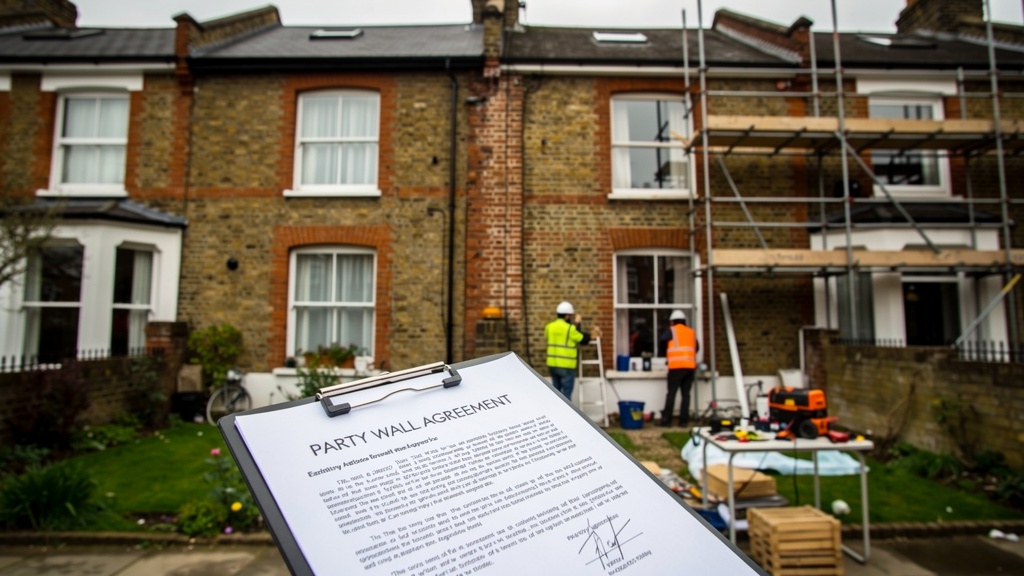
Clapham Surveyors handles more party wall matters than any other type of enquiry. And it's easy to see why. The Party Wall Act 1996 affects thousands of South London homeowners every year — yet most people have never heard of it until they're about to start building work. This guide covers everything you need to know.
What Is the Party Wall Act 1996?
The Party Wall etc. Act 1996 is a piece of legislation designed to prevent disputes between neighbours where building work affects shared walls, boundaries, or foundations. It applies throughout England and Wales and creates a formal process for notifying neighbours, resolving disputes and protecting both parties during construction.
It's important to understand that the Act is not about preventing your neighbours from building — it's about ensuring they do so safely and responsibly, with your rights protected throughout.
When Does the Party Wall Act Apply?
The Act applies in three main situations:
- Section 1 — New walls on the boundary line: If you plan to build a new wall astride (on) the boundary between your property and a neighbour's, you must serve notice.
- Section 2 — Works to an existing party wall: Any work that cuts into, removes, rebuilds or inserts beams into a party wall (the wall shared with your neighbour) requires a party wall notice. This includes loft conversions, rear extensions and chimney breast removal where the wall is shared.
- Section 6 — Excavation near foundations: If you plan to dig within three metres of a neighbouring building to a depth lower than their foundations — for example, for a rear extension or basement — you must serve notice.
What Is a Party Wall Notice?
A party wall notice is a formal, written document you serve on your neighbours informing them of the works you intend to carry out. There are strict requirements about what a notice must contain and the timeframes for serving it:
- Section 1 works: Notice must be served at least 1 month before works begin.
- Section 2 works: Notice must be served at least 2 months before works begin.
- Section 6 excavations: Notice must be served at least 1 month before works begin.
Once your neighbour receives the notice, they have 14 days to respond. They can: (a) consent in writing; (b) dissent and appoint their own surveyor; or (c) be deemed to have dissented (if they don't respond within 14 days).
"We received a party wall notice from our next-door neighbour who was planning a loft conversion. We had no idea what to do. James from Clapham Surveyors called us within the hour, explained our options clearly, and acted as agreed surveyor for both parties — meaning our neighbour covered the cost. The process was completely painless." — Philip & Wendy K., Clapham Junction
What Is a Party Wall Award?
A party wall award (sometimes called a party wall agreement) is a legally binding document produced by the appointed surveyor(s) that sets out how the building work is to be carried out, what protections are in place for the adjoining owner, and what happens if damage occurs.
The award typically covers:
- A description of the works to be carried out
- Working hours and access arrangements
- A schedule of condition of the adjoining property (before works)
- Insurance requirements
- Provisions for making good any damage caused
- Who pays the surveyor's fees (usually the building owner)
The Importance of a Schedule of Condition
A schedule of condition is a photographic and written record of the adjoining owner's property before works begin. It's one of the most valuable elements of the party wall process.
Without a schedule of condition, it can be extremely difficult to prove whether damage was caused by the building works or existed beforehand. With one, both parties have a clear, timestamped record to refer to in the event of a dispute. At Clapham Surveyors, we strongly recommend a schedule of condition in all cases — even where the adjoining owner has consented to the works.
You can read our dedicated guide: What Is a Schedule of Condition and Do You Need One?
Building Owner's Surveyor vs Agreed Surveyor
When a neighbour dissents to a party wall notice, each party can appoint their own surveyor. The two surveyors then work together (with a third surveyor as a tie-breaker if needed) to produce the party wall award.
Alternatively, both parties can agree to appoint a single "agreed surveyor" who acts impartially for both sides. This is often quicker and cheaper. Our party wall surveyors in Clapham regularly act as agreed surveyor — meaning the building owner covers the fees and both neighbours benefit from the same professional expertise.
Party Wall Matters in Clapham: What We See Most Often
In our experience covering the Clapham area, the most common party wall scenarios include:
- Loft conversions in Victorian terraces — where the structural alterations often affect the shared party wall at roof level
- Rear single or double-storey extensions — requiring notice under Section 2 and/or Section 6
- Basement and cellar conversions near Clapham Common and Clapham Junction — often the most complex, involving significant excavation
- Chimney breast removal — very common in Victorian properties where owners are reconfiguring ground floor layouts
Case Study: Loft Conversion on Crescent Lane, Clapham
A client asked us to act as their party wall surveyor for a loft conversion. Both adjoining neighbours were initially unsure about the works. We held a brief conversation with each, produced comprehensive schedules of condition for both properties, and drafted a party wall award that satisfied all parties. The project completed without a single dispute about damage. Total time from instruction to award: six weeks.
Frequently Asked Questions
In most cases, the building owner (the person carrying out the works) pays the surveyor's fees — including any surveyor appointed on behalf of the adjoining owner. This is set out in the Act itself and is designed to ensure the adjoining owner isn't out of pocket for protecting their rights.
Ignoring the Act is a serious risk. Your neighbour can apply for an injunction to stop the works, and you could face significant legal costs. Without a party wall award, you also have no clear framework for resolving any damage disputes that arise during construction. Always comply with the Act — the process is far less painful than the alternative.
A neighbour cannot prevent you from carrying out works that are permitted under the Party Wall Act, provided you follow the correct process. What they can do is trigger the formal dispute resolution process, resulting in a party wall award that sets out the conditions under which the works must be carried out. The Act ultimately protects both sides.
If your neighbours consent promptly, the process can be completed within the statutory notice period (1–2 months). If they dissent and a party wall award is required, allow 2–4 months in total. At Clapham Surveyors, we move as quickly as possible to minimise delays to your project.
It depends. A conservatory built onto an external rear wall (not a party wall) within three metres of a neighbour's property may trigger Section 6 notice requirements. If the conservatory involves any work to a shared wall, Section 2 notices apply. Our party wall surveyors can advise you quickly on whether your specific project requires any notices.
Next Steps
If you're planning building work in Clapham and think the Party Wall Act might apply, the first step is a conversation with a qualified party wall surveyor. At Clapham Surveyors, we offer free initial advice — and we can usually tell you within minutes whether you need to serve notice.
Don't wait until the last minute. The statutory notice periods are fixed, and starting works without compliance can cause significant legal and financial problems. Contact us today to get the process started properly.
Also useful: Our full party wall services page | Schedule of condition guide